
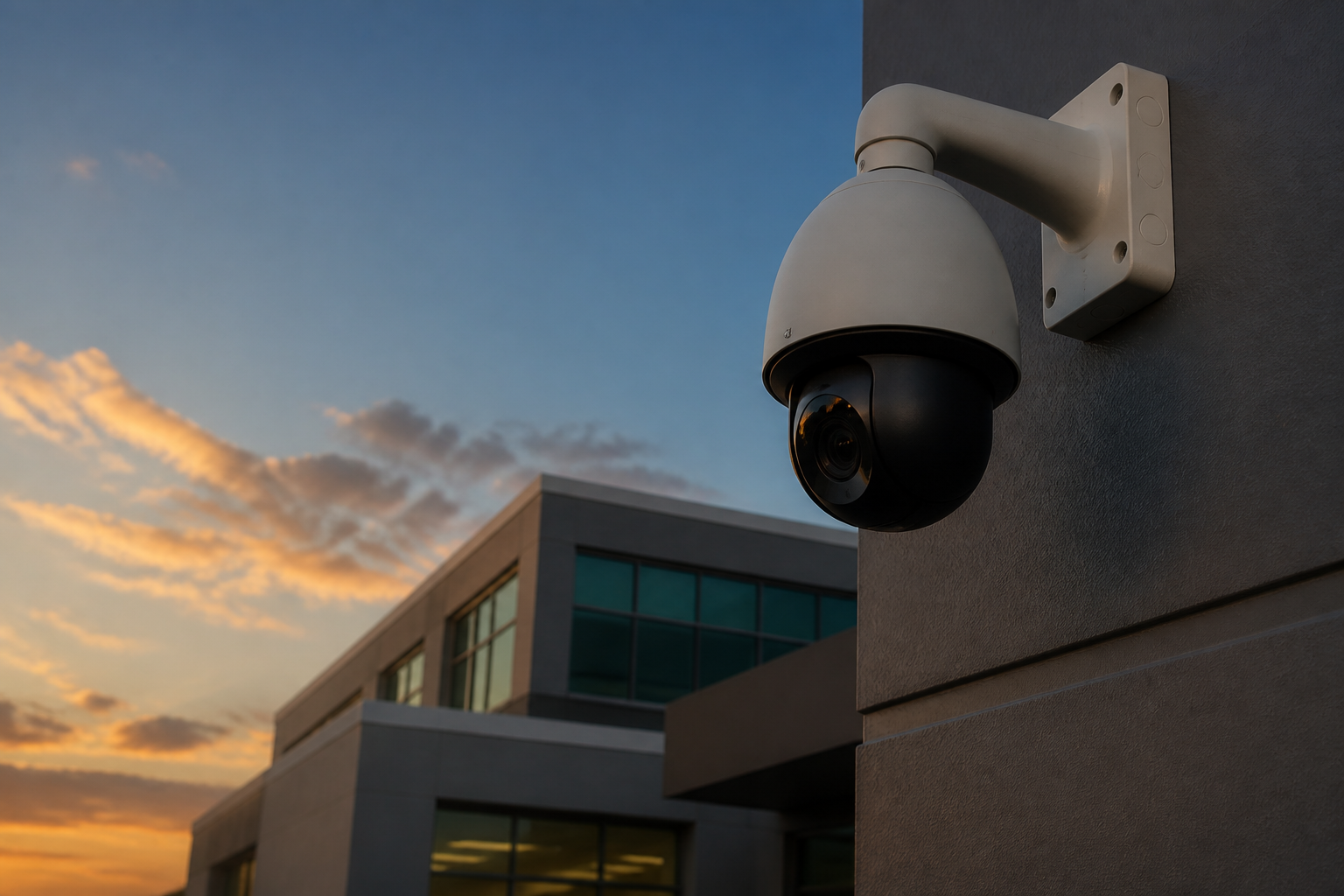
CCTV
How IP Camera Systems Work on a Property Network
Guidance only. Verify any statutory or insurer requirement against current official South African sources. CapeCore does not publish unverified legal claims.
The pieces of an IP system
Each camera is a small computer on a network. Power often arrives on the same Cat5e or Cat6 cable (PoE). Video is recorded on a network video recorder. A switch, a UPS and a sensible IP plan sit in between. The phone app is only a window onto that recorder.
Why cabling quality matters
Cheap, unshielded or poorly terminated cable causes dropouts that look like camera faults. Outdoor runs need UV-stable cable, glands and, where lightning is a risk, surge protection. Do not share a congested office Wi-Fi network as the only path for sixteen cameras.
Retention and storage
How many days you keep footage depends on camera count, resolution, motion recording and the size of the disks. “A month of recording” is a calculation, not a slogan. Motion-based recording saves disk but can miss slow movement if the sensitivity is wrong.
Support after handover
Passwords, firmware and a documented layout are part of a usable system. CapeCore installs IP CCTV that can be serviced from Parow Industrial, with remote viewing specified only where it is useful and supportable.
Related reading
Next step
Request a quote
Tell CapeCore about the property and the systems you need assessed.