
Access Control
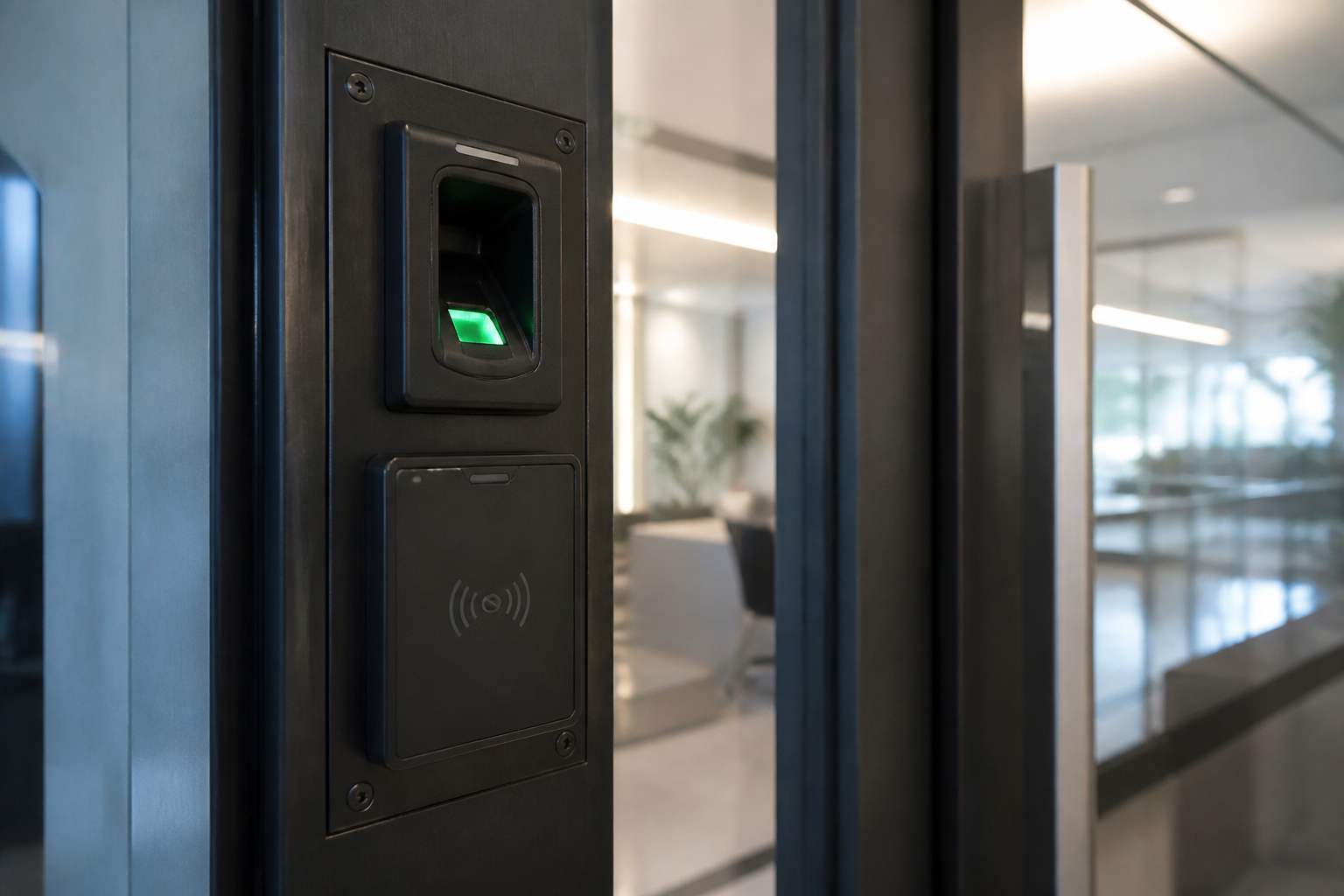
Biometric Access Control: Fingerprint and Face Readers
Guidance only. Verify any statutory or insurer requirement against current official South African sources. CapeCore does not publish unverified legal claims.
What biometrics add
A fingerprint or face template is harder to lend than a card. That suits server rooms, medicine cupboards, cash offices and any door where “I lent my tag” is a real risk. It is slower than a tap at a busy turnstile, so do not put a fingerprint reader on the only staff entrance at shift change without testing the queue.
Failure modes are ordinary
Wet hands, worn fingerprints, hats, backlighting on a face reader, and dirty glass all cause false rejects. Always specify a card or PIN backup for the same door, and a documented admin process.
Privacy of templates
Templates should live on the controller or a secured server, not in an unnamed cloud by accident. When staff leave, delete the template. CapeCore does not claim legal advice; employers should treat biometric data as personal information under South African privacy law and take their own advice.
Not every door needs a face camera
Use biometrics where the risk justifies enrolment time. Cards still do most of the work in ordinary offices.
Related reading
Next step
Request a quote
Tell CapeCore about the property and the systems you need assessed.