
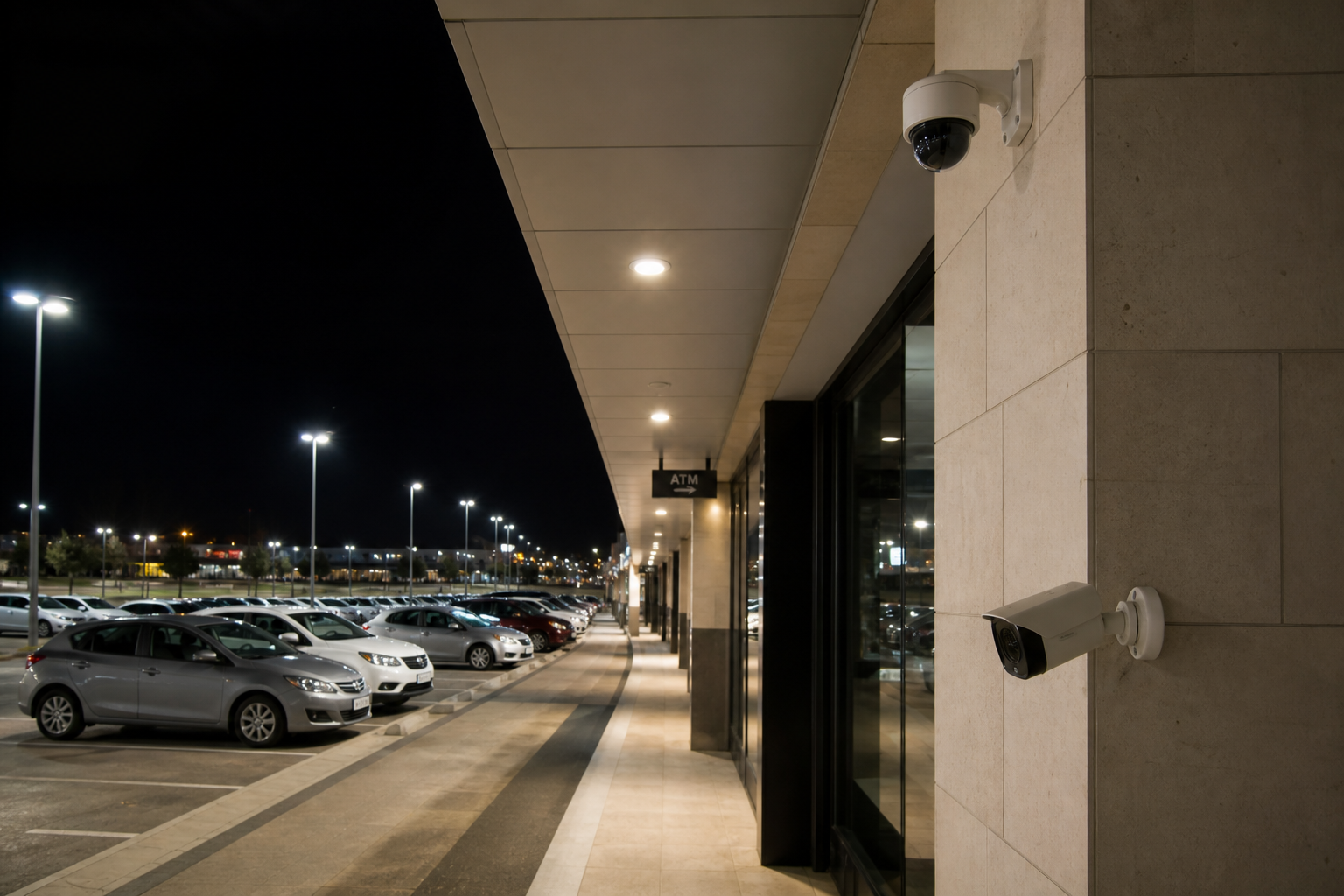
CCTV
Night Vision and Low-Light CCTV That Actually Identifies People
Guidance only. Verify any statutory or insurer requirement against current official South African sources. CapeCore does not publish unverified legal claims.
Infrared is not magic
Most outdoor cameras use infrared LEDs. The picture goes black-and-white and the range is limited. Too much IR on a nearby wall, a dirty bubble or rain close to the lens produces glare. Distance and mounting angle matter more than the marketing range printed on a box.
Colour at night
Some cameras keep colour with a large sensor and a modest white light, or with very sensitive chips. Colour helps clothing and vehicle description. A bright built-in spotlight can also annoy neighbours and create hard shadows. Use light with intent, not by default on every camera.
Street lights and sunsets
Western Cape evenings often put a bright sky behind a dark driveway. Wide dynamic range (WDR) helps, but placement is still the first tool: do not aim straight into the sun or a floodlight. A second camera covering the same opening from another angle is sometimes cheaper than arguing with physics.
Test at the hour that matters
CapeCore checks night scenes on site rather than relying on daytime photos. If you need to identify a face at the pedestrian gate after 21:00, that is the test, not a brochure still.
Related reading
Next step
Request a quote
Tell CapeCore about the property and the systems you need assessed.